
Why Houston Homes Don’t Always Follow the Rules Buyers Expect
Understanding Houston’s flexible land-use system and what buyers should know before purchasing
If you are relocating to Houston or exploring areas like Spring, Cypress, Tomball, Magnolia, or Conroe, one thing can feel unusual very quickly: the neighborhood around a home may not look as predictable as it would in a traditionally zoned city.
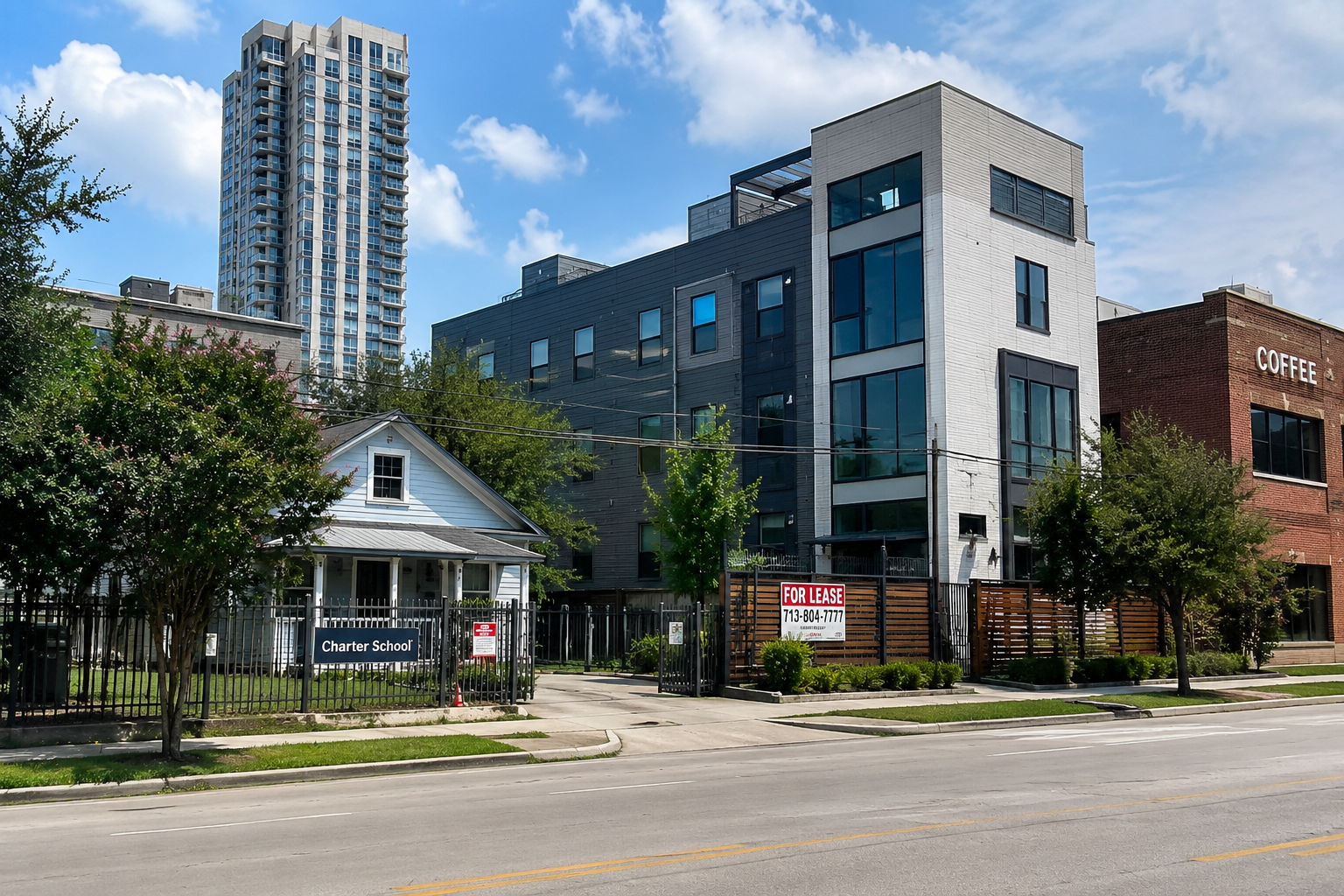
You may see homes next to small commercial buildings, older houses beside new construction, or streets that gradually transition from residential to mixed-use activity.
That is not necessarily a sign that the area is poorly planned. It reflects the way Houston and parts of the surrounding region have historically approached land use and development.
At a Glance
| What Shapes the Property | What It Can Affect | Why Buyers Should Care |
|---|---|---|
| Deed restrictions | Use, structures, setbacks, architectural rules, or other property limitations | A property may be restricted even when there is no traditional zoning. |
| HOA rules | Exterior changes, parking, structures, leasing, and community standards | The neighborhood may feel highly structured even without municipal zoning. |
| Development regulations | Subdivision, access, permitting, drainage, floodplain, setbacks, and infrastructure | “No zoning” does not mean “no rules.” |
| Nearby land use | Future commercial, residential, industrial, or mixed-use development | What surrounds the home today may not be what surrounds it later. |
Houston Was Built Differently
More flexible than many major U.S. cities
Houston is widely known for not using traditional citywide zoning in the same way many other major cities do. Instead, land use is shaped through a combination of deed restrictions, subdivision rules, development regulations, permitting, floodplain requirements, building codes, and private community restrictions where applicable.
What that means in real life
Houston can allow a broader mix of development patterns than buyers may be used to seeing in more heavily zoned markets. Residential, commercial, and redevelopment activity can sometimes exist much closer together.
The result is a city where neighborhoods can evolve property by property instead of every block following one uniform development pattern.
Why Some Areas Feel So Mixed Together
One of the first things relocation buyers notice is how quickly the character of an area can change.
You might pass:
- an older residential property beside a new custom home
- a small business near a residential street
- vacant acreage surrounded by newer subdivisions
- a traditional neighborhood a few blocks from commercial redevelopment
What buyers should understand
The home itself is only one part of the decision. The surrounding parcels, access roads, deed restrictions, future development, and nearby land uses can matter just as much to long-term enjoyment and resale.
The Opportunity Behind Houston’s Flexibility
One advantage of a more flexible development environment is variety.
Across Houston and North Houston, buyers may find:
- ✓ Traditional single-family neighborhoods
- ✓ New construction and infill development
- ✓ Acreage properties
- ✓ Custom homes
- ✓ Barndominiums and metal-shell home concepts in some areas
- ✓ Tiny-home or alternative-home concepts where allowed
- ✓ Properties with mixed residential and business-use potential, depending on applicable restrictions and regulations
That variety can create opportunities for buyers looking for more land, fewer restrictions, custom-building potential, or a property that supports a more specialized use.
Explore custom home building →
Not Every Houston-Area Community Feels the Same
Even within the Greater Houston region, buyers will encounter very different levels of structure.
| Area Type | What Buyers May Notice | What to Verify |
|---|---|---|
| Houston urban areas | Greater variety and closer mixing of uses | Deed restrictions, platting, permitting, nearby development, floodplain, access |
| Master-planned communities | More uniform design, amenities, and private restrictions | HOA rules, architectural controls, dues, deed restrictions |
| Acreage / ETJ areas | More variation in lot use, structures, utilities, and neighboring properties | Restrictions, septic/well, access, floodplain, utilities, permitting, intended use |
Neither structure nor flexibility is automatically better. The right fit depends on what you want from the property and how much predictability you prefer around it.
The Most Important Buyer Question
In Houston, you are not simply buying a house. You are buying a property with its own combination of restrictions, surrounding land uses, utility arrangements, development patterns, and future possibilities.
Instead of asking only
“Do I like this house?”
Also ask: “What can happen on this property and around this property over time?”
Before You Buy, Investigate These
A buyer evaluating a property in a flexible land-use environment should look beyond the listing photos and current surroundings.
- ✓ Are there recorded deed restrictions?
- ✓ Is there an HOA or architectural-control process?
- ✓ Is the property inside city limits or an ETJ?
- ✓ What are the neighboring parcels currently used for?
- ✓ Is nearby vacant land likely to be developed?
- ✓ Are there easements, access issues, or utility limitations?
- ✓ Is the property in or near a floodplain or drainage feature?
- ✓ Would your intended future use actually be allowed?
- ✓ Could surrounding development affect resale, noise, traffic, privacy, or access?
Explore the complete buyer’s guide →
Why This Matters for Resale Too
Future buyers will evaluate many of the same things you are evaluating today.
A home may be beautiful, updated, and well maintained, but nearby land use, traffic, commercial activity, restrictions, lot utility, or future development can influence how broadly the property appeals when it is time to sell.
Think beyond today
Flexible land use can create opportunity, but buyers should also think about future marketability. The question is not only whether a property works for you now, but whether its location and surrounding uses are likely to remain attractive to future buyers.
The Bottom Line
Houston’s flexible development pattern is one of the things that makes the market so diverse.
It creates room for traditional neighborhoods, acreage, custom homes, infill construction, mixed-use environments, alternative housing concepts, and properties that may offer possibilities buyers would not find in more rigidly zoned cities.
But flexibility also requires stronger due diligence.
The goal is not to avoid properties simply because the surrounding area is less uniform. The goal is to understand exactly what governs the property, what surrounds it, and what may change over time before you make the decision to buy.
Continue Your Research
If you are comparing homes, land, or custom-building opportunities around North Houston, these resources can help you evaluate the property from more than one angle.
Considering a property with unusual land use, acreage, or future potential?
I can help you look beyond the house itself and organize the questions that matter, including restrictions, nearby development, land-use concerns, utilities, floodplain considerations, access, and the property’s long-term fit.
This content is for general educational purposes only and is not legal, land-use, zoning, engineering, environmental, tax, or development advice. Deed restrictions, municipal regulations, ETJ authority, permitting, floodplain requirements, utility availability, and development rules vary by property and jurisdiction and may change. Buyers should independently verify property-specific information and consult the appropriate governmental agencies, title professionals, attorneys, engineers, surveyors, or other qualified professionals when needed. Equal Housing Opportunity.
FROM OUR BLOG


Buying a Home With a Well & Septic System in Texas
North Houston Property Guidance Buying or Selling a Home With a Well or Septic System in Texas What these systems do, why properties have them, and the due diligence that helps protect buyers and sellers A private well or septic system is not automatically a problem and it should not automatically b

Buying or Selling a Home With a Well or Septic System in Texas
Some of the most important parts of a property are not visible when you walk through the front door.Homes on acreage, in unincorporated areas, and in some established communities may rely on a private well, septic system, or both. These systems are common in parts of Magnolia, Montgomery, Conroe, To

What Is My Houston-Area Home Worth?
How Do I Know What My Houston-Area Home Is Actually Worth? What Houston-area sellers should know about comparable sales, competition, condition and pricing Two homes can be only a few streets apart and still have very different values. Across Houston, Spring, Tomball, Cypress, Magnolia, Klein, The W
Results That Speak for Themselves
NateKruedelbach

bagita29
9211th